Monday, February 5, 2007

Laughing is a survival skill 2/5/07

There are absurdities here so numerous I fail to keep track. Here are two.

The Range Rover that transports us to and fro is well past its prime. Built in the 70's as a military vehicle, some how the "Green Machine" keeps plugging along, though it would fail every step of an American inspection. In order to start the thing, it must be hotwired, for there is no key. And getting it going requires the pushing power of several men, because the truck can only start out of second gear. The gas tank is hilariously placed under the driver's seat and the only way to asses the fuel level is to put a finger in and look at the line the liquid leaves on your hand. The old thing broke down no fewer than seven times in the first seven days I was here in Kimana. One morning the truck lost power while we were switching to 4 wheel drive, which is normal. The only problem was we were in the middle of a small river. But this dilapidated vehicle is one of the best in the village, and the daily problems only make driving it a communal affair. Everyone chips in a push or a tow, and anyone is welcome to hitch a ride in the bed as you drive down the main road.

The bat living in the latrine is, however, a greater ridiculousness that I have had to incorporate into my life here. Not to be overly graphic, but the bathroom here is an outhouse with a hole in the floor, which one squats over in order to relieve himself. The hole leads to a deep pit of human waste. Last week I was using the place late at night and in the midst of my business, as I squatted there backside bare to the air, something flew out of the hole, grazing my ass. I stood up immediately, not sure what had hit me, only knowing it was more bird sized than bug sized. I tried to convince myself that the flying creature was only a moth or a figment of my American imagination. But a few days ago my worst fear was confirmed. Once again I heard the wings fluttering below me as I hunkered over the hole. Standing up with a jolt, I swung my head lamp toward the floor, and sure enough, flying around in the pit below my bottom was a bat, just waiting to scare the shit out of me.

Sunday, February 4, 2007

Blessed are the Poor 2/4/07

A parable came to life as I was giving out pay at Oloile this past Tuesday evening. The teachers are paid between $185 and $225 a month here at the school, and those salaries are noticeably higher than many private schools around. But most of the staff had taken advances on their pay checks, which meant that as the remainders were given out at Month's end, the amounts were between $85 and $210. As we handed them each their cash and had them sign for it, the teachers counted quickly what they had been given and heartily thanked me. And though I took each occasion to thank them in turn, for the work was theirs not mine,I felt a bit sick at the picture I was painting: a white man handing out small salaries to a line of black workers. The image was a throw back to colonialism. I think, next month I will have the head teacher administer payroll instead.

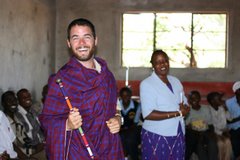
The Biblical lesson came through at the end of the evening as the rain outside threatened flood, and we all worried we would not make it back across the river to town. David Kilelo, a middle aged Maasai warrior and the security guard here, sat down with his bow and arrow beside him to receive his monthly income. He, like the rest, had taken an advance on his 5000 shillings and the remainder was a mere 3200, which is about $50. That was his monthly pay. But the joy he took in receiving it and the pride he put into slowly sketching out his name in capital letters, brought a knot to my throat and that funny sensation in the stomach that comes before crying. "Blessed are thepoor", Jesus says, and at times I know what he means.

Tuesday, January 30, 2007

A New Head Teacher 1/30/07

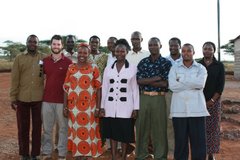
Eve Yamoi Merin had just come from lecturing on Child Rights at an international forum when I met her in Nairobi, but she is as down to earth as anyone in Kenya. A round faced woman with a hearty smile and a knowing shine in her eye, Eve sat patiently waiting in the cafe where I was meant to meet her a half hour earlier than I actually did, a common occurence here. We were sitting down together because she was one of the few educated, Maasai women with school administrator experience I had even heard of. A District Education Officer named Lashao accompanied me to the interview and did most of the questioning that day. I took careful notes, mindful of butting my American head in to a local process. When we did speak I recognized her ease with ideas, gentle leadership skills, and heart for her people: the Maasai. Within a half hour of our conversation, I was certain I wanted to hire her as Oloile's head mistress. The other Staff of Hope folks had already given their blessing. This consensus was bolstered by Eve's own commitment to the school, which was made obvious in her willingness to move a couple hours away from her two sons and husband to take on the responsibilities of a budding school. On Sunday afternoon Tyson and I met Eve as she stepped off her Matatu, a small van used as public transport, and made our way to a local guest house. We talked over tea about our similar convictions about the educational needs of girls in the Maasai community. A few hours later we continued the conversation at the school grounds as she met some of the staff, who came by to say hi, eventhough it was a weekend afternoon. She shared a hope that we might build her a small living quarters so she might stay on the school premises. I agreed to the idea immediately. And yesterday I saw her skill with the parents as the first year students lined up all day to register for the new term at this new school. When she gathered the staff after the longday, she assured them she would treat them as equals and made thempromise to call her "Head Teacher" instead of Head Mistress, for she found the later old fashioned and too authoritarian.

Because of Eve and a thousand other reasons I have hope for Oloile.

Tuesday, January 23, 2007

Kimana by night 1/23/07

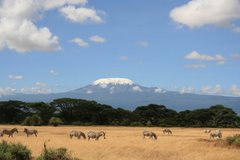
Kilimanjaro watches over the Oloile Secondary school and the village of Kimana, but she is unnoticed like a housewife whose beauty has been forgotten. But when I first saw the mountain this morning, with its flat white capped top, she stole my breath like a first kiss. In the afternoon the peak hides behind cloud cover and at night she disappears, replaced by the other wonder of this place: the stars.

Traveling the rough road two nights ago on the trek from Nairobi to Kimana, we bottomed out in the van, pounding the dark dirt with a jolt. A few miles later we stopped to find the engine spewing oil like afaucet that had been left on at full force. Needless to mention, there is no AAA in Kenya. We called and waited for local help to arrive. Two hours later, we were rescued by our friends in Kimana, who towed us with a large truck and a jerry rigged hitch. But as I waited in the bush with my companions, the star filled sky held my attention without distraction. It was as if I had never really seen the nights sky before. I mean to say that what passes for stars anywhere else I have been is a cheap imitation, as close to the real thing as a plastic statue of liberty is to the actual structure. The detail and multitude of light available to the naked eye...is...ineffable.

After the four hour tow, we arrived in Kimana at about 3am. My first impressions of the village would have to wait til morning. In truth they are barely forming even now, but I can share one.

Each morning I wake up to roosters, dogs, goats, and cows all making their favorite morning noises. Water is warmed for me and I bathe in awood enclosure similar to a fitting room at a retail store, except of course it is outside and under an African sky. That warm wash is a great gift and so is the fresh chai made of cows milk that is given tome three times daily with plates of home made food. All of these treats come by the hard working hands of women. Mama Nasieku, the wife and mother of the house I am living in, her sisterRahab, and mother in law Eunice, serve me in ways that I do not deserve. In fact, I wouldn't survive here without what they provide me: food, water, and clean clothes. It is hard as an American man to receive. In fact most of what is done for me as an American is challenging to take in. I am here at a post office at the expense of friends who drove me. The midnight tow took the help of seven village men. Each journey I take to the school requires a ride in the family's only car, indeed one of the few in the community.

At the same time, I feel like I am surprisingly able to contribute here. I am learning the great value of listening and have taken notes on each person I have met and the important school related conversations I have had. Progress is being made in the beauracratic process entailed in creating a school. I am learning the system rapidly, partaking in official meetings and seeing things happen.

Wednesday, January 10, 2007

Return from Uganda 12/5/06

Spending a Tuesday night sunset on a hammock made of tree branches and listening to the sounds of Lake Victoria, of Uganda, of Africa was one of the sweetest moments of my life. The sounds were a cacophony of bugs, birds, and frogs.Three lively dogs were my company. Our abode this last week in Kampala was a cozy luxury, a retreat for sure. Our friend Leslie was hosting us in her guest cottage, something out of a fairytale- two small bedrooms, lots of light, wooden and wicker furniture and an outlook over the lake. The main house had a screened in veranda on the second floor with a view like I have never seen. For our last three days, we lived like the privileged Westerners we are.

As a kid I collected Adventure Men, plastic action figures like GI Joes, who wore adventure clothes and came with kayaks, tents and backpacks. I wanted to be one of them. Pretended it. When we went camping as a family I would jump into shorts with extra pockets, hooks, Velcro, and snaps to be an adventurer myself. Night and day during the last two weeks in Uganda I got to dress like an adventure man again. I wore hiking pants and packable shoes, durable, lived in button downs, and a head lamp around my neck. I smelled of unwashed clothes and deepwoods bug spray, but I felt more fresh and alive than I do most days here in New York.

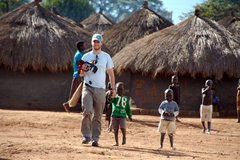
Though it takes more work to make it through a day, and simple things like running water and electricity, things we take for granted, are often missing, days in Uganda are experienced in hyper reality. Every sense is heightened. Life is a bit more on the edge and ordinary comings and goings felt like adventures. Riding the back of a boda boda forty five minutes on a dirt road into the bush, eating rice and beans at a table full of men who were dipping meat in broth with their bare hands, or trekking in the dark to meet the night commuting kids, ordinary events in our time there, were intensified by the senses, made overwhelmingly extraordinary. Walking between huts in IDP camps with cameras in hand and dozens of children tailing us, we saw and heard horrors we were incapable of taking in. You step back emotionally, unable to process what is coming at you. It is all too much. But that onslaught of experiences is also so full that one cannot help but want to live everyday so deeply.

I realize that two weeks in a place is a honeymoon not real life. Over time, the amazement would rub thin and the annoyances of corrupt government and dangerous roads would frustrate like flies in your food. But nonetheless, Chris and I spoke endlessly about ways to stay and places to come back to. And I think we will return, sooner rather than later and remain past the easy days.

We were white outsiders in Uganda, and I have to mention white because that was all most people knew of us when they stared. We were constantly on display. Our every step, glance, and word were watched as if entertainment. They laughed at us, asked money of us, wanted to meet us, and sometimes looked to take advantage of us. Whatever the scenario, we were very much aware at all times that we were the"Mzungo". Things are not equal in the world. We are by virtue of birth and nationality rich; they are, upon the same merits, poor. The realization is stunning. Returning to New York City, in the midst of the holiday hub-bub, the African world we just came from feels totally other, separate. Coming out onto Park Avenue from the subway, I am reminded of something I read while on the trip, Mountains Beyond Mountains, the biography ofPaul Farmer, a doctor to the poor in Haiti. Upon returning to the U.S., Farmer is asked the same question by a friend, "Doesn't this feel likea different world?" He responds somewhat sarcastically, "The polite thing to say would be, 'You're right. It's a parallel universe. There really is no relation between the massive accumulation of wealth in one part of the world and the abject misery of another.'"

Critical Thinking 11/27/06

Critical thinking is not a part of the curriculum here I am told, and though I have not been to enough schools to report on teaching first hand, I trust what I have heard because I see it play itself out.Teachers ask a question and students respond as if reciting a catechism. You answer the question asked, nothing beyond. When you ask someone on the street if he knows how to get to Roma restaurant, for instance, he will likely reply, "yes", and it is not until you ask,"how do you get to Roma restaurant?" that you will get anything resembling directions. Sometimes, we joke, you have to ask the same question in six or seven different ways.

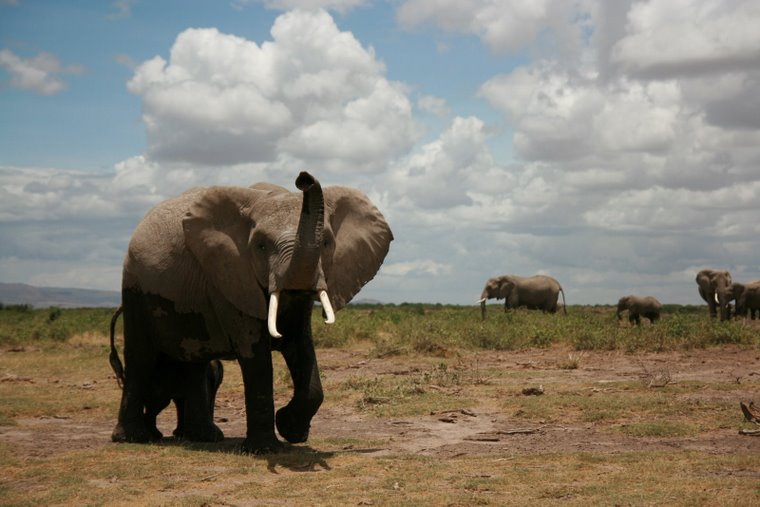
Thinking creatively, outside of the box, is not valued. When we asked kids at a Sunday afternoon HIV program to play with us on camera by acting like different kinds of animals, they simply mimicked one another. It did not matter that the first child was asked to be an elephant the second child, who was asked to be a grass hopper, would act just like the first. I can assume that it stems from a number of causes, but one of them I am sure is colonialism. Under British rule, it was advantageous for the white people in power to create an educational system based on call and response, recitation, and wrote memory. Critical thinking would lead to questioning authority, and that could shake the empire's tight grip. The problem arises when the satellite colony gains its freedom.The children who were taught not to question become leaders, businessmen, and farmers who are not skilled at problem solving. They know what to answer when asked, but are not sure what to ask on their own.

Thanksgiving in Gulu

When it rains in Gulu, and it does rain everyday, the red clay roads turn to gush. Your shoes slip, sink, and stick to the stuff. When the mud dries on your clothes they are speckled in bright brown dots. Shoes are caked with clay.

When the sun shines in Gulu, and it does shine everyday, everything is in hyper color. The whites of walls glare back like the albedo of snow. Leaves, grasses and palms are aggressively green. The purple, orange, pink, red, turquoise, and yellow uniforms of school children light up like neon under the sun's gaze. Each school yard is its own hue in the spectrum, because every school has a different colored uniform; the brighter the better it seems. The sun intensifies the darkness of skin and the sparkle of sweat. And it burns my fair face and neck.

In a five hour period yesterday I was both scorched and soaked. The paradoxes of Uganda are plentiful.

Thanksgiving rushed up on us. In the preceding three days we had run from place to place at a fast clip, what they call "rebel speed" here.We visited a house for former child prostitutes, made dinner with our new friends in Kampala, rode the rough road to Gulu, stopping at aschool twenty miles down a dirt road and our first IDP camp, sat with a high court judge in her chambers, documented a woman's adoption hopes at an orphanage, played theatre games with former street children, met the family of a former Prime Minister who are now displaced in their own country, interviewed the administrator of a child soldier rehabilitation center, and everywhere filmed kids eating, singing, and gathering water. Getting from place to place is also a part of the story. Boda Bodas, motor scooter taxis, are the way around here. Riding on the back of them is a hoot, and haggling over whether you are going to pay the driver 500 shillings (27 cents) or 700 shillings (35 cents) can be feirce. Not getting riped off as a Mzungo (foreigner) is quite a challenge, especially since trickery is a prided cultural skill here. On the fifteen kilometer trip to an IDP camp yesterday with our contact Francis, we rode the backs of boda bodas, but because the drivers left instead of waiting for us there, on the way home we rode the backs of bicycles, the poor man's taxi. The entire return was uphill.

In the whirlwind of running around the most apparent constant has been the generosity of the Ugandan people. As tis ever common away from wealth, what people lack in tangibles like housing, electricity, paved roads, and running water, they compensate for in intangibles, time with family, religious devotion, and good conversation.

Though Ugandans are resilient, constantly smiling people, they unfortunately have to cope daily with dirty, disease infested water, malaria spreading mosquitoes, poor schools, life stealing roads, and the threat of continued violence from a messy, goalless rebellion. No one has been able to explain the war, and everyone has tried, but I thank God the conflict is at rest for now. The more questions we ask about it the more we know that we simply do not know. Every confident explanation someone posits is spiced with a bias, and the conflicting points of view we have heard make having a solid opinion nearly impossible. Everyone is praying though that the peace talks stick and the displaced people may return home.

The work at hand is preparing for that return, which with the structures that are in place now, could be disastrous. After living for 15 years in a hut with three square feet of yard squished next to 30,000 other IDP residents, it is hard to imagine that starting life again, with the building, planting, and animal raising that that involves, will be simple. Now put more than a million people in that scenario and send them home at once and you can begin to guess where the complications are. How will they get there? What materials will they build new homes with? Will they have safe water when they get there? Seed to plant? Schools to attend? Police forces to provide security? And the hopeful answers to any of those questions require funding, good implementation, and reliable governance.

The biggest challenge is that the real change must come from withinUganda. I mean that NGO's and foreign donors may assist in setting up the resources and the security, and they must, but the people here will need at some point to own their own futures. Ugandans will be the farmers, teachers, doctors, law makers, police officers, and soldiers of Uganda and the fate of the country relies more on their ownership than anything else. The charity of wealthy nations is essential, more than is known, but the true welfare of the future here will be in the hands of its people. Thankfully I meet local folks everyday who are giving every bit of themselves to that end. I doubt that all the sweat and heart they put into their neighbors will ever transform all that needs to be renewed in this place. Good, motivated, educated Ugandans are trying though, and that is what we were thankful for at the table set with fresh turkey, mashed potatoes and apple crisp yesterday.